Wednesday, September 5, 2012

Diet Suggestions to Breast Cancer Patients


A healthy diet during cancer treatment is essential to help patient remain strong to fight the cancer, rebuild tissues and cells damaged by the cancer and the treatment, and maintain a healthy immune system. You may also find that diet can minimize some of the side effects that are so common during treatment for breast cancer. It is important to take care of patient body during treatment so that it can fight the cancer.

Balanced Diet
Cancer patients should eat a varied diet. The diet should be rich in fruits and vegetables to provide the body with essential vitamins. Patients should also eat foods that are high in fiber to aid the digestive system which is often irritated by certain cancer treatments. A varied diet should also include proteins found in meat, beans and dairy products. Dairy products are also important because they provide the body with calcium and other vitamins and minerals. It is also important to drink plenty of water during treatments.

Below are the foods good for breast cancer patients


Vegetables
Acorn squash
Arugula
Bell peppers
Bok choy
Broccoli
Brussels sprouts
Butternut squash
Cabbage
Carrots
Cauliflower
Celery
Chives
Collard greens
Cucumbers
Garlic
Hot peppers
Kale
Leeks
Lettuce
Mushrooms
Mustard greens
Olives
Onions
Pumpkins
Scallions
Seaweed
Spinach
Tomatoes
Turnips and turnip greens
Watercress
Zucchini

Fruits
Apples
Blackberries
Blueberries
Boysenberries
Cherries
Cranberries
Grapes
Lingonberries
Loganberries
Marionberrries
Pomegranates
Raspberries
Watermelon

Beans
Black beans
Dry beans
Kidney beans
Navy beans
Pink beans
Pinto beans
Red beans
Soybeans
Tofu
White beans

Meats & dairy
Chicken, organic
Eggs, organic
Fermented milk
Kefir
Low-fat cheese
Low-fat yogurt
Turkey

Nuts & seeds
Brazil nuts
Flaxseed
Sesame seeds*
Walnuts

Beverages
Green tea
Pomegranate juice
Reishi tea*

Oils & fats
Canola oil
Flaxseed oil
Olive oil
Sesame oil*
Walnut oil

Fish
Herring
Mackerel
Salmon
Sardines

Spices & herbs
Basil
Black pepper
Cilantro
Parsley
Saffron
Turmeric

Grains
Brown rice
Buckwheat
Tartary buckwheat


Foods to Avoid
Avoid foods that are fried or high in fat as they may increase the nausea common in patients being treated for cancer.


Meats & dairy
Bacon
Barbecued meat
Beef
Butter
Cheese
Cream
Lamb
Mutton
Pork
Veal
Well-done meat

Fish
Dried herring
Dried mackerel
King mackerel
Pickled herring
Shellfish
Smoked mackerel

Beverages
Alcohol
Beer
Coffee
Essiac tea
Reishi tea
Sage tea
Wine
Yerba maté

Spices & herbs
Lavender
Meadow saffron
Sage
Salt
Wild ginger

Condiments & sauces
Gravy
Guacamole
Kimchi
Pesto sauce
Pickled papaya
Salted shrimp paste
Soybean paste

Vegetables
Avocados
Fermented vegetables
Fried potatoes
Green papaya

Beans
Soy protein isolate

Oils & fats
Corn oil
Lard
Mustard oil
Partially-hydrogenated oil
Safflower oil
Sesame oil*
Soybean oil
Sunflower oil

Nuts & seeds
Bitter almonds
Papaya seeds
Sesame seeds

Sweets & desserts
Brown rice syrup
Persipan
Red bean paste
Sugar

Other suggestions on diets
The patient with breast cancer of late stage should try to take some food easy for digestion, try to take the food and water in warm way, avoid spicy and irritated diets.

Notice: these suggestion are applicable to general breast cancer patients, if you need more suggestions for individual, please send us the medical papers or CT scans and inform us the patient current condition, we will offer you more professional suggestions after study of case.


Treatments and Preventions of Squamous Cell Skin Cancer


Treatments and preventions of squamous cell skin cancer are particularly important since the risks factors of skin cancer are continuing increased. 

Treatments  

Treatment depends on the size and location of the skin cancer, the distance it has spread, and the patient’s overall health condition. Some squamous cell skin cancers may be more difficult to be treated. 

Treatments may involve in Modern Cancer Hospital Guangzhou:
  • Excision operation: Cutting out the skin cancer and stitching the skin together
  • Cryosurgery: Freezing the cancer cells, which kills them
  • Medication: Skin creams containing imiquimod or 5-fluorouracil for superficial (not very deep) basal cell cancer
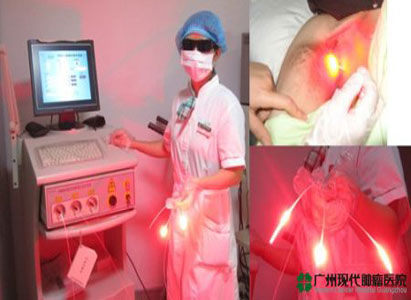
  • Photodynamic therapy: Treatment using light, may be used to treat skin cancer
  • Radiation may be used if the squamous cell skin cancer has spread to organs or lymph nodes, or for cannot be treated with surgery. Interventional therapy or immunotherapy is also applicable in some cases.

Outlook (Prognosis)

How well a patient does depends on many things, including how quickly the cancer was diagnosed. Most of these cancers are  well treated when treated early. Some squamous cell cancers may return.

Dermatologist from Modern Cancer Hospital Guangzhou suggested that if you have had skin cancer, you should have regular check-ups so that a doctor can examine your skin. You should also examine your skin once a month. Use a hand mirror to check hard-to-see places. Call your doctor if you notice anything unusual.

Possible Complications

Squamous cell cancer spreads faster than basal cell cancer, but still may grow slowly. It may spread to other parts of the body, including internal organs.
Preventions
 
Always use sunscreen:
Other important facts to help you avoid too much sun exposure:
  • Avoid surfaces that reflect light more, such as water, sand, concrete, and white-painted areas.
  • The dangers are greater closer to the start of summer.
  • Skin burns faster at higher altitudes.
  • Avoid sun lamps, tanning beds, and tanning salons.
Examine the skin regularly for unusual growths or skin changes.


Monday, September 3, 2012

PDT (Photodynamic Therapy)-Anti-Cancer "Photon Bullets"

 1. What Is PDT?


  Photodynamic therapy is a non-invasive therapy using photosensitizer and laser to effectively destroy cancer cells. PDT was approved by the U.S. FDA for clinical application in 1996 and approved for clinical application by Chinese SFDA in 2003.

  Cancer tissue absorbs a great deal of photosensitizer injected intravenously whereas normal tissue absorbs little. Then special laser irradiation is employed to kill tumor. During the process, photosensitizer interacts with cancer cell and leads to intoxication through necrosis of cancer cells on photodynamic effects, thus the tumor gradually disappears.


  2. What are treatments for tumor?
 
  Surgery →chemotherapy →radiotherapy →immunotherapy →PDT
  PDT is considered among top five anti-cancer procedures recognized by international community.

  3. Procedures for PDT
 
  First step: photosensitizer is injected. PHOTOFRIN ® is among the most common photosensitizers.
  Second step: It usually takes 40 to 50 hours after injection before PDT is performed.
  Third step: laser irradiation is applied to focus area to kill cancer cells.

  4. Benefits
 
  • Minimally invasive – avoid surgery and wound. Less pain caused.
  • Quick effects –the effects show up in 48 to 72 hours
  • To prevent cancer recurrence - destroy tiny lesions and minimize tumor recurrence.
  • Few complications - low toxicity. It well suits patients with advanced cancer or elderly patients and those with poor physical status.

  5. Clinical application
 
  • Oropharyngeal cancer: Effective rate reaches 75% -100% for early oral cancer and nasopharyngeal cancer.
  • Esophageal cancer: can remarkably improve obstruction of progressive esophageal cancer; effective in cervical esophageal cancer and disseminated submucosal esophageal cancer; be capable of eliminating intracavity tumor from esophageal cancer treated with stent placement and progressing intracavity.
  • Barrett
  Barrett’s esophagus: can not only eliminate Barrett’s esophagus epithelium, but also can treat early esophageal adenocarcinoma.
  • Lung cancer: cure rate for early bronchial cancer reaches 90%. Improvement rate for progressive obstructive bronchial carcinoma reaches 85%.
  • Gastric cancer: cure rate for early gastric cancer is 85%; effective in improving symptoms of progressive gastric cancer
  • Bladder Cancer: to treat carcinoma in situ. Effective rate for progressive cancer reaches 71%.
  • Other cancers: colorectal cancer, cholangiocarcinoma(especially hilar cholangiocarcinoma), pancreatic, ampullary cancer, abdominal cancer, pleura mesothelioma and abdominal mesothelioma, liver cancer, brain tumor and genitourinary tract cancer.


 http://www.asiancancer.com/technology-equipment/118.html

Cancer Treatment Decisions: Several Steps to Help You Decide

  
  You've just been diagnosed with cancer and your mind is reeling, it will be very hard for you to make a decision, while your doctor wants you to sort through cancer treatment options and help decide on a plan. But how do you decide on a cancer treatment plan? Here are several steps to help you to decide.

  Steps on helping you to decide

  Step 1: Set your ground rules

  ●Decide how much you want to know.
  ●Decide how you want to make your treatment decisions.
  ●Have realistic expectations.
  ●Keep the focus on you, be relaxed.
  ● Accept help from families, friends and doctors.

  Step 2: Decide on a goal

  ● Treat: When you're first diagnosed, it's likely you'll be interested in treatments that treat cancer.
  ● Control: If your cancer is at a later stage or if previous treatments have been unsuccessful, you might adjust your goal to controlling your cancer.
  ● Comfort: If you have an advanced stage cancer or one that hasn't responded to treatments, you might decide that comfort is most important to you.

  Step 3: Research your treatment options

  To make a reasonable treatment decision, keep in mind the type of cancer you have, its stage, and what treatment options are available and how likely these treatments are to work under these circumstances. Cancer treatments are sometimes used in conjunction with each other.

  Step 4: Analyze the benefits versus the risks

  Compare the benefits and risks of the different cancer treatments to decide which treatments fall within your goals.

  ● Side effects
  ● How treatment affects your daily life
  ● The financial costs of treatment
  ● Your health in general

  Step 5: Communicate with your doctor

  ● Speak up when you don't understand.
  ● Write your questions in advance.
  ● Record your conversations.
  ●Bring someone with you.
  ● Keep copies of your medical records.

Sunday, September 2, 2012

An Appreciation Letter from the Families of a Bangladesh Intestinal Cancer Patient


 Mr. Tan, who is a Bangladeshi, suddenly occurred to abdominal pain, distension and vomit in Feb. 2012. After undergoing PET/CT examination in local hospital, a mass was found in Mr. Tan’s abdomen which was then diagnosed with intestinal cancer with colic omentum and abdominal wall metastases. This sudden news is a heavy blow to Mr. Tan and his family. They send him to a local hospital for treatment, while it was with poor effect.
  In an occasional chance, they learnt about a hospital in Guangzhou, China, which is specialized in the treatment of cancer, that is Modern Cancer Hospital Guangzhou. For further treatment, Tan and his families decided to go to Guangzhou, China. After admission in May 2012, experts from Modern Cancer Hospital Guangzhou helped Mr. Tan with a detailed inspection, which showed that there is a mass with the size of 5×6cm in his abdomen. According to Mr. Tan’s individual condition, the experts make out a treatment plan which is combined with particle implantation and interventional therapy. After treatments, Mr. Tan’s body condition and mental status was improved to a large extent.
  During the administration period, all the experts, doctors, nurses and translators of Modern Cancer Hospital Guangzhou are very concerned about Mr. Tan's condition and needs. They encouraged him and his families to build confidence to fight against cancer and do not give up easily. Mr. Tan's family therefore wrote this letter of praise, to express their gratitude and appreciation.
Intestinal cancer
Dear Director Peng, all the doctors and nurses,
  I am Musfeq, from Bangladesh, the relative of Mr. Tan who is an intestinal cancer patient in Modern Cancer Hospital Guangzhou. In the past five days, I accompanied Mr. Tan to undergone treatments in your hospital. Although Mr. Tan is in advanced stage of colorectal cancer, I 'm very satisfied with your hospital’s good therapeutic environment.
  From the beginning of admission, Director Peng has attached great importance to Mr. Tan's and developed treatment plans according to his individual condition. Director Peng is very excellent and I believe that his cancer treatment experience can help Mr. Tan. I hope Mr. Tan will be better soon after the treatment. God bless him!
  Although the environment here is very different from that in the Bangladesh, Dr Sakib Bengali and the translators tried their best to help us to adapt life in China and made us feel at home. Good luck to Dr Sakib Bengali!
  The nurses of Modern Cancer Hospital are also very outstanding. When Mr. Tan is in need of help, they are always around, they never made us feel being isolated and helpless. They work fast and carefully. They are the most capable nurses I have ever met.
  Eventually, I hope that Mr. Tan can stay away from cancer pain through the treatment of Modern Cancer Hospital Guangzhou and the protection of God.
  Thank you!

Disclaimer: Therapeutic effect depends on individual patient's condition. The content of this website is for informational purpose only,this can not be the basis of medical diagnosis and treament and even can not replace the diagnosis and treatment from doctors. Please refer to Terms and Condition for more information.

I Wanna Survive

I Wanna Survive

  Looking at the ceiling, I don’t know how many sleepless nights I have through! Before April 2011, my life has been very calm as family is so blissful and growth of children leaves me no worry. This is just the beginning of my later life, but one day this calm was completely broken!
 

Calm is broken
 
  One day, I suddenly found that my right breast has a stiff bump, and gently press caused no pain. However, after knowing this, my family suggested me to go to a hospital for detailed check. The next day I came to a hospital for B ultrasound and biopsy, and the results showed there was a goose egg size mass inside my right breast, and it was diagnosed as breast cancer by Indonesian doctor. After knowing this, my brain got caught up in blank: What should I do? Am I going to die? How about my family, my children? I am only 47 years old, I want to live... These voices have been continuously circling in my head.
  Indonesian doctor suggested me to do surgical resection to remove the tumor, but I refused. I can't imagine the scene that operation knife gashes my body, but I fear more that whether breast cancer will get worse after surgery, and speed up my death. Indonesia doctors arranged me to take Chinese traditional medicine with foot massage treatment for breast cancer. During this period, my family and I were caught up in the infinite darkness. After period of Continuous treatment time, recheck has found that the lump has narrowed so that I thought that my life will face new hope and I can conquer breast cancer. However, I accidentally injured right breast and caused its swelling in May, then continuously-taken Chinese traditional medicine and foot massage therapy made no change to breast. My family searched everywhere for the chances for living, while I just wanted to quit treatment at that time. The pain from treatment and indefiniteness of carrying on living or not, all these scared and desperate me a lot. But all these came to an end at the time of May, 2012, when a new came.

  I want to live
 
  In July 2011, my family has inquired a hospital rich in cancer treatment experience -Modern Cancer Hospital Guangzhou. Looking at the expectation inside the eyes of families, I promised to go to Guangzhou to receive treatment in a trail mood, and I wanted to live.
  After taking off plane, I saw the car of Modern Cancer Hospital Guangzhou is waiting for me, and then I was accommodated into the ward. To my surprise, I was not arranged a series of examination and treatments immediately. Nurses and translators just came in to my room and chatted with me for introducing hospital environment and patients of surrounding wards, and to inquiry if there is any uncomforting? After that doctors asked me to talk about my condition and formal treatments, and then they told me to have a good rest. The doctor's professional and nurses kindliness eased and relaxed me a lot. I thought I would not get used to it and fear it greatly, but that day, I did really feel calm and peace
  The next day, nurses arranged me to take examinations, and experts of Modern Cancer Hospital Guangzhou confirmed that it was an infiltrating ductal carcinoma Ⅱ level as per the results of examinations. After consultation and discussion, they worked out the treatment plan designed for me. This made me firstly to know that treatment plan can be customized. Cancer experts of Modern Cancer Hospital Guangzhou have successively performed 6 times of interventional therapy and 3 times of Ar-He cryotherapy, as well as radiotherapy. I felt that my body condition is gradually improving.

  I can live
 
  I no longer get fever or feel bone pain without cause; mental health and appetite are improving, especially I finally can sleep a whole night without interrupt. Cancer experts Modern Cancer Hospital Guangzhou tell me that my illness is under control, after further treatment, the effect will be better. At this moment I feel I can live. Then I often chat with nurses, and other cancer patients as well for exchanging anti-cancer experience. Mutual encourages make us keeping positive attitude and strong belief to struggle with cancer. I feel that life has been gradually returned to my embraces. My family and I have formed a more firmed faith on treatment, I could live, I could live better and healthier!
Disclaimer: Therapeutic effect depends on individual patient's condition. The content of this website is for informational purpose only,this can not be the basis of medical diagnosis and treament and even can not replace the diagnosis and treatment from doctors. Please refer to Terms and Condition for more information.


 http://www.asiancancer.com/patients-stories/816.html

Emotional Side Effects of Cancer

In this section you can learn more about the types of feelings that people with cancer commonly experienced during and after treatment. We also offer suggestions for dealing with these common feelings in healthy ways.

Coping with cancer in everyday life:

In this guide we review how some people facing cancer have dealt with their feelings and their individual situations. This information comes from many people who have shared their thoughts and feelings about coping with cancer because they believe it's helpful to hear from others who have been "in their shoes."

Distress in people with cancer:

A certain amount of distress is normal when you or a family member has cancer. But some people may be affected more than others. Here we discuss some of the signs that a person may be having trouble dealing with distress, and discuss the types of help that are available.

Anxiety, fear and depression:

Most people face some degree of depression, anxiety, and fear when cancer becomes part of their lives.

Coping with the loss of a loved one:

Losing a loved one can be a painful and difficult time to cancer patient’s families and friends. In this guide, we discuss the grieving process and offer tips that may help you cope with your loss.

Attitudes and cancer:

Does stress cause cancer? Can keeping a positive attitude help to treat it? To a great extent, a negative attitude may make the patient’s condition more severe while a positive attitude can help to relieve the adverse situation and treat it.

Coping checklist for patients and caregivers:

These checklists can help patients and caregivers spot signs of anxiety or depression in themselves or others, and learn about their own coping methods.
Cancer is an upsetting experience. Worries about treatments and the future make it hard to function. Find what to do if the stress is too much to handle.