Sunday, September 23, 2012

Basal Cell Carcinoma


Basal cell carcinoma is the most common form of skin cancer and accounts for more than 90% of all skin cancer in the world, according to experts from Modern Cancer Hospital Guangzhou. These cancers seldom spread (metastasize) to other parts of the body. They can, however, cause damage by growing and invading surrounding tissue.
What are risk factors for developing basal cell carcinoma?
Light-colored skin, sun exposure, and age are all important factors in the development of basal cell carcinomas. People who have fair skin and are older have higher rates of basal cell carcinoma. About 20% of these skin cancers, however, occur in areas that are not sun-exposed, such as the chest, back, arms, legs, and scalp. The face, however, remains the most common location for basal cell lesions. 
What does basal cell carcinoma look like?
A basal cell carcinoma usually begins as a small, dome-shaped bump and is often covered by small, superficial blood vessels called telangiectases. The texture of such a spot is often shiny and translucent, sometimes referred to as "pearly." It is often hard to tell a basal cell carcinoma from a benign growth like a flesh-colored mole without performing a biopsy. Some basal cell carcinomas contain melanin pigment, making them look dark rather than shiny.
Superficial basal cell carcinomas often appear on the chest or back and look more like patches of raw, dry skin. They grow slowly over the course of months or years.
Basal cell carcinomas grow slowly, taking months or even years to become sizable. Although spread to other parts of the body (metastasis) is very rare, a basal cell carcinoma can damage and disfigure the eye, ear, or nose if it grows nearby.
How is basal cell carcinoma diagnosed?
To make a proper diagnosis, doctors usually remove all or part of the tissues for a biopsy. This usually involves taking a sample by injecting a local anesthesia and scraping a small piece of skin. This method is referred to shave biopsy. The skin that is removed is then examined under a microscope to check for cancer cells.

Three Thank You Poems from Patients with Lumbar Disc Herniation


 Ms. Luo has suffered from lumbar disc herniation for many years and has been tortured by back and leg pain. In order to get rid of this disease, She has treated in several hospitals without any improvements. Eventually introduced by a friend, she came to Modern Cancer Hospital Guangzhou for treatment.
  After admission, Ms. Luo was undergone a series of examinations and doctors from Modern Cancer Hospital Guangzhou applied minimally invasive orthopedic treatment in accordance with the results of the examinations. After operation, Ms. Luo’s physical condition has improved and her lower back and leg pain relieved.
  During admission in the third floor of Modern Cancer Hospital Guangzhou, Ms. Luo received careful and considerate care from nurses. In order to express her gratitude to them, Ms. Luo wrote three thank you poems.
lumbar disc herniation
Praise the Kindness of Beautiful Nurses
  Chief Nurse with effective leadership, beautiful nurses with brilliant work.
  Greetings with smile like my families, good attitude with seriousness and responsibility
  Careful nursing brings my good recovery, good work with proficient skills
  Good service to exclude difficulties and anxieties, good medical ethics to bear hardship without complaint.
  Security work is done well, the tradition to carry it forward is good.
                                                                                                            Ms. Luo from Guangzhou Youth Vocational College
                                                                                                                                      June, 22, 2012
lumbar disc herniation
Praise the Physiotherapy Department
  New open of physiotherapy department, many patients after news spread.
  Handsome doctor Wang Zhihui works overtime like bees.
  Additional nurse Lai Xiaoling jointly works together with Doctor Wang.
  The selfless work deserves praise, keep on working with sickness and pain.
  All happy with early rehabilitation, say goodbye and thank you!
                                                                                                             Ms. Luo from Guangzhou Youth Vocational College
                                                                                                                                       June, 26, 2012
lumbar disc herniation
Praise Modern Hospital
  Good leadership from leader team, good unity from division and cooperation
  Each department doing well, doctors having good medical skills and ethics.
  Good leadership of Chief Nurse, good work of beautiful nurses.
  Great smiles from pretty hospital guides, good service of people oriented.
  Harmonious relations of doctors and patients, early recovery of patients.
  Hygienic accommodation with good environment, good job in security
  Well known overseas with good reputation, modern hospital is really good.
                                                                                                              Ms. Luo from Guangzhou Youth Vocational College
                                                                                                                                        July, 13, 2012
Disclaimer: Therapeutic effect depends on individual patient's condition. The content of this website is for informational purpose only,this can not be the basis of medical diagnosis and treament and even can not replace the diagnosis and treatment from doctors. Please refer to Terms and Condition for more information.

Thursday, September 20, 2012

Skin Self-exam


Skin self-exam is no longer a strange word to ordinary people, since the out breaks of skin cancer has been increased largely nowadays, and skin self-exam methods have been cautious by a great number of people.
Skin self-exam means check your own skin regularly for any abnormal growths or unusual changes. A skin self-exam helps find any suspicious skin problems early. The earlier the skin cancer is diagnosed, the better chance you will have for successful treatment.

How the test is performed:

Modern Cancer Hospital Guangzhou recommends that people should perform a skin self-exam once a month.
When you are performing the skin self-exam, look for:

· New skin markings (moles, blemishes, changes in color, bumps) 
· Moles that have changed in size, texture, color, or shape 
· Moles or sores that continue to bleed or won't heal 
· Moles with uneven edges, differences in color, or lack of even sides (symmetry) 
· Any mole or growth that looks very different from other skin growths

Experts from Modern Cancer Hospital Guangzhou recommend that you examine your skin in the following procedures:

· Look closely at your entire body, both front and back in the mirror. 
· Check under your arms and both sides of each arm. 
· Examine your forearms after bending your arms at the elbows, and then look at the palms of your hands and underneath your upper arms. 
· Look at the front and back of both legs. 
· Look at your buttocks and between your buttocks. 
· Examine your genital area. 
· Look at your face, neck, back of the neck, and scalp. It is best to use both a hand mirror and full-length mirror, along with a comb, to see areas of your scalp. 
· Look at your feet, including the soles and the space between your toes. 
· Have a person you trust help by examining hard-to-see areas.

Considerations

Always tell your doctor if:
· You have any new or unusual sores or spots on your skin 
· A mole or skin sore changes in size, color, or texture 
· You have a sore that does not heal

Tuesday, September 18, 2012

Breast Cancer Diagnosis

As proven by studies of Modern Cancer Hospital Guangzhou, the incidence rate of breast cancer accounts for 10% of all diseases of the whole body. It is the natural enemy threatening females’ health. However, many females have no idea about breast cancer. As a result, they fail to undergo timely treatment and miss the best treatment chance when admitted to hospital. Then, how to diagnose whether breast cancer has occurred? What are the diagnosis methods of breast cancer?


http://www.asiancancer.com/cancer-diagnosis/breast-cancer-diagnosis/

Sunday, September 16, 2012

A Patient's Family Is Showing Dietitians How an Indonesian Dish Is Made

September 15, 2012, Anane, an Indonesian patient’s family from the 7th floor of the ward area in Modern Cancer Hospital Guangzhou showed doctors, dietitians and other patients how the Indonesian home dish “pindang kuing” is made in the hospital’s ward kitchen. After the co-working of Anane and his assistants, the dish which combined color, aroma and taste was made together. The exquisite culinary skill of Anane has received high praise.


colon cancer

 What Is Colon Cancer?

Colon cancer refers to a tumor arising from colonic mucosal epithelium which becomes malignant under the impact of various carcinogenic factors like environment, genetics, etc. It often occurs in rectum and the junction of rectum and sigmoid colon. The incidence rate of colon cancer is second only to gastric and esophageal cancer. Conlon cancer is more common in the people at age of 40 to 50 and patients with colon cancer who are under age of 40 accounts for approximately 15%. The male and female ratio is 2:1.

  What are the Causes of Colon Cancer?

1. Diet: diets high in fat or low in fiber are believed to predispose humans to colon cancer.
  2. Genetics: if first-degree relatives develop colon cancer, the risk of the next generations developing colon cancer is higher than others.
  3. Colon polyps: polyps grow in the inner wall of colon or rectum, which are benign initially but it is likely to become malignant.
  4. Crohn’s disease or ulcerative colitis: the risk of developing colon cancer in patients with Crohn’s disease or ulcerative colitis is 30 times higher than others.

  Who are High-risk Populations?

1. The population has a history of familial polyposis.
  2. The people have first-degree relatives with colon cancer.
  3. Occult blood test shows positive in a long term.
  4. Patients develop chronic ulcerative colitis.
  5. The population has chronic diarrhea or chronic constipation.

  What are the Symptoms of Colon Cancer?

1. Bright red or dark red blood in your stools
  2. Abdominal pain, bloating, bad digestion, loss of appetite
  3. Changes in your bowel habits, including intermittent (alternating) constipation or passing stools more frequently than usual, even diarrhea
  4. Stools that are thinner than normal
  5. Long-term anal ulcers, continuous anal pain that have not been cured
  6. Signs of liver metastasis such as jaundice, ascites, edema

  How Colon Cancer Will be Diagnosed?

1. Digital rectal exam: doctor may insert a gloved finger into your rectum through your anus to check whether there is lump or not.
  2. Fecal occult blood test (FOBT): it is used for check the hidden blood in stool, because hyperplastic tissues of colon cancer usually will effuse a small amount of blood and once the blood entered the stool, it will be discharged. If FOBT is continuously positive with many times, it indicates chronic bleeding of digestive tract thus further tests should be done.
  3. X-ray test: it includes barium meal examination of total digestive tract and barium enema. The barium outlines colon on the x-rays. It can check whether there are multiple polyps and multiple cancer focus or not.
  4. Colonoscopy: it should be done when patients who experience blood in stool, changes in bowel habits, and with negative result for digital rectal exam. Colonoscopy will detect various kinds of lesions in colon and if focus is found, they are sent to do tissue biopsy.
  5. Ultrasonography, CT scan, MRI: they cannot be directly used for diagnosis of colon cancer, but they are of some value in judging the cancer’s location, size, its relations with surrounding tissues, lymph and whether liver metastasis occurs or not.

  Stages of Colon Cancer are:

Stage 0: abnormal cells are found in the wall of colon and colon cancer in this stage is also called primary cancer.
  Stage I: Cancer is in the inner layers of colon, invading submucosa
  Stage II: Cancer has spread through the muscle wall of the colon, but it has not spread to lymph nodes.
  Stage III: Cancer has spread to the lymph nodes around colon, but it has not invaded other parts of body.
  Stage IV: Cancer has spread to other organs, such as lung, liver, abdominal wall, ovary, etc.
  Reoccurrence: colon cancer reoccurs after treatment and the recurrent regions are colon or other organs.

  What are the Treatments for Colon Cancer?

1. Surgery: it is a common treatment for colon cancer. Surgery is generally used in early colon cancer and patient’s most part or entire colon will be removed.
  2. Radiation therapy: it is carried out after surgery to decrease local recurrence rate of colon.
  3. Chemotherapy: it can be used to destroy cancer cells after surgery, controlling tumor growth or relieving symptoms of colon cancer.
  4. Biological immunotherapy: with no pain and no need to be hospitalization, it not only can relieve toxic side effects brought by radiation therapy, but also can improve patient’s immunity and quality of life.

  Traditional Chinese Medicine

Combined with traditional Chinese medicine, firstly, human body can get back to be dynamic balance, secondly, complications after surgery can be reduced, thirdly, sensitivity to radiation therapy and chemotherapy can be enhanced, reduced toxic side effects, fourthly, risk of reoccurrence and metastases can be decreased, thus patient’s quality of life can be improved and survival rate can be prolonged.

  What does Postoperative Nursing Include?

1. About Clothes: soft, comfortable, elastic clothing should be chosen, in addition, belt should not be too tight so as to avoid pressing the wound.
  2. About Bath: after the wound is healed completely, patient can take bath.
  3. About Diet: patients need to ensure nutritional balance, eating more fresh fruits and vegetables.
  4. About Exercise: appropriate exercise should be done to enhance physical condition and improve cold tolerance and resistance of body.
  5. About Mental State: patient should keep optimistic and positive attitude, as well as avoid being depressed and tense.

  What kinds of supports can be obtained?

Practice proves that the clinic team services composed by multiple disciplines like oncosurgery, oncology, pathology, imageology and anesthesia doctors as well as professional nurses, can provide patients with most effective, most suitable and most economic treatment plan, and also can greatly improve the therapeutic effect of treating cancer patients.
  “One station” medical system constructed by Modern Cancer Hospital Guangzhou combining multiple disciplines, can perform comprehensive diagnosis and treatment for patients under the condition of without adding patients’ burden. Therefore, on one hand, it can provide all-round and heartfelt medical services, and on the other hand, it improves medical efficiency and level. There are many channels can be applied to conduct the communication between patients and doctors, like online consultation, email, telephone conversation, and face-to-face consultation. All these consultation services can effectively help patients to fight the cancer. While the medical team faced by the patients includes doctors, nurses, dietitians, interpreters and so on to meet various demands in different level of different countries. Patients would be more confident under the unobstructed communication environment to cooperate the hospital to diagnose and treat the diseases.
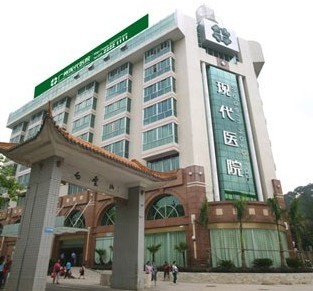
Natural Treatments for Prostate Cancer


Prostate cancer is a painful and common form of cancer that is found only in men, and is related to a number of known and unknown factors said Prof Huang Zhiqiang, a cancer expert from Modern Cancer Hospital Guangzhou. Since many natural substances are beneficial for prostate health and have cancer inhibiting properties, there is potential for a natural cure for prostate cancer.

  Types
Natural treatments for prostate cancer include herbal therapy, food therapy, minerals, lifestyle and exercise, and stress reduction techniques.
Herbs
Herbs that are used as natural cures for prostate cancer include saw palmetto and pygium. These act directly on the prostrate to reduce enlargements. Anti-cancer herbs such as green tea fight cancer systems on a wider spectrum.
Foods
Certain foods can be natural prostate cancer cures. Broccoli and tomato contain compounds that affect the prostate and cancer cells. These compounds are also found in maitake and shitake mushrooms.
Minerals
Selenium and calcium are greatly utilized by the body while fighting cancer. Both should be an integral part of any natural prostate cancer cure plan.
Lifestyle
Exercise releases powerful chemicals in the body that assist in the fight against cancer and stress reduction techniques such as meditation boost the overall immune system.