Wednesday, May 15, 2013

The First Exchange Meeting between Bangladesh Members of China Multidisciplinary Experts Team


Host: the Bangladesh Members of Chinese Multidisciplinary Experts Team
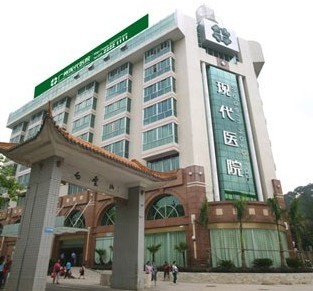
Supported by: Modern Cancer Hospital Guangzhou Dhaka Office, Prothom-alo and Dhaka Tribune.
Meeting Date: May 25, 2013
Meeting place: The second floor of Rigs Inn HOTEL
Activities:
Lecture 1: A New Concept of Treating Malignant Tumors---Multidisciplinary Combined Therapy;
PRESENTED BY:Dr. Enamul Haque
Lecture 2: Prevention and Recovery of Cancer
 PRESENTED BY:Dr. Wang Le
For the latest information about international cancer treatment, please join us!  Especially welcome to patients and their family members.

Saturday, May 11, 2013

Do Not Panic at the H7N9 Flu Strike


How to distinguish H7N9 flu from common cold?
 
  Common flu is an acute respiratory infections caused by influenza viruses, which can be divided into three types, namely, type A, type B, and type C. Autumn and winter are the high incident seasons especially. 

  H7N9 flu is a type A influenza virus, a type or subtype of avian influenza virus. After the exchanges of genes, it will probably transfer to human body and cause infections. With a short onset period, H7N9 flu has slightly higher severity and mortality than SARS, which has aroused high attention.
For more information about its symptom, prevention, please read here: http://www.asiancancer.com/cancer-healthcare/cancer-prevention/2477.html

Saturday, May 4, 2013

Expert from Modern Cancer Hospital Guangzhou Answer Your Questions about Lung Cancer

Data shows that each year, there are 700 million people in the world would be killed by cancers, and among which, lung cancer occupies the prime location. About lung cancer, most people do not know it very much, but just have an idea that smoking causes lung cancer and the majority of lung cancer patients are male. But these are just plain information, and Director. Cao of Modern Cancer Hospital Guangzhou would like to give a detailed introduction about lung cancer from the prevention, nursing to dietary, so people may know how to stay far away from lung cancer.

  More than 80% of lung cancer cases are caused by smoking?

  Director Cao says: more than 80% of lung cancer cases are caused by smoking. If you are a lifelong smoker, the probability of suffering lung cancer is about 15%, that is, there will be one person among every 6-7 smokers gets lung cancer, so it is really a high-risky disease with a very frightening proportion. Factors causing lung cancer are not only limited to smoking, as air pollution, stress, family factors may also be the causes of lung cancer.

  What should be done when discover patients have already been in a feared status of mind?

  Director Cao says: Many lung cancer patients or family members would fear the disease once they discover the existence of lung cancer. This situation is understandable; however, the fear is certainly useless for treatment, sometimes even harmful to it.
  Psychologically speaking from patients’ respect, we must first get rid of the frightened psychological status, but to correctly treat the disease. In addition, in terms of the family members of patients, doctors shall try not to conceal the truths about patients’ condition, but now it also advocates letting patients know their own condition, of course, it is needless to tell them in details but just let them know what the disease that they are suffering are. With the improvement of people’s cultural level, the majority of patients can accept this disease and actively cooperate with treatment, so if they don’t know the disease, some patients may be unwilling to cooperate with treatment, leading to delays in treatment.

  "30% on Treatment, the other 70% on Nursing Care”, is nursing care really so important?

  Director Cao: lung cancer treatment is not just treatment techniques, but also includes body care, psychological care, family care, etc. After treatment, later nursing care treatment occupies an important position and also plays a role in promoting therapeutic effect. After lung cancer treatment, the patient's body is relatively weak with weak immune system, if without good physical care, it will lead to wound infection, and even other complications which would aggravate the progression of the disease. Psychological care is vital, and can be well managed through self-encouragement, self-regulation and support from their families to remain optimistic and positive attitude and establish firmly anticancer beliefs.

  Lastly, Director Cao of Modern Cancer Hospital Guangzhou reminds: people should be aware of the necessity of receiving annual physical checks, and twice for the elders each year, so as to timely detect diseases in case there is any. Developing good habits, eating less fried food, doing sports like exercising vital capacity, all these should start from the details of daily life and can prevent the occurrence of cancer.


Friday, May 3, 2013

Priciples and Benefits of 125I Seed Implanation

125I Seed Implanation –Tumor-Oriented Therapy


  125I seed implantation –tumor-oriented therapy
  Non-invasive, bloodless
  Painless, low rates of side effects
  Increase life expentancy and quality of life
  Three-dimensional radioactive seed implants(internal radiation system): Iodine implants are 0.8 mm in thickness, about 0.4 cm in length.

  1. Treatment principle


  125I seeds implant are an energy radionuclide which can give off continuous, short-range γ-ray to kill tumor cells. It can achieve the same internal radiation effects on tumor as surgery does. Hence, it is called seeds knife.


  Benefits


  Radiation is limited to inside tumor and avoid damage to normal tissue.
  Effectively kill tumor by continuous and effective exposure up to 180 days.
  Relieve pain and increase survival rate and quality of life

  2. Procedures


  Tumor size from CT and MR results is input into three-dimensional treatment planning system (TPS) to construct a dimensional image with the same size as that of actual tumor. The number of I seed implants, location of each implant and overall treatment plan depends on tumor location, shape and size.
  Under CT or ultrasound guidance, I 125 seed implants are directly placed into the tumor by a special set of equipment or placed into residual tumor bed and possible paths of metastatic lymph node spread. These implants keep emitting γ-ray within tumor, as "land mines" targets tumor cells accurately.

  3. How you feel after implantation


  125I seed implantation has fewer complications and mild side effects. Thus it will not lead to severe organ dysfunctions. Therefore, most patients feel nothing special after the procedure.

  4. Indication


  It applies to a variety of primary and metastatic tumors.

  5. the number of I seeds to implant


  Bigger the tumor is, more I 125 seeds are needed implanting. Sometimes even one implantation procedure could eliminate all of the tumor. More I seeds can be implanted if an insufficient number of seeds is detected in follow-ups.

  6. Duration of therapeutic effect


  Effective radiation effect of 125I seeds can be present for about 180 days due to its 60.1-day half-life period and gradual attenuation of radiation dose.

  7. Can radioactive seed implantation therapy prevent cancer recurrence?


  Radioactive seed implantation is a local therapy for tumor coming into being and to kill cancer cell in implants site. It can effectively and thoroughly kill cancer in conjunction with other treatments , such as A -He cryotherapy.

  8. How to verify therapeutic effect of I seeds implants?


  125 I seed implants in human body can continuously emit γ-ray to attack cancer cells. Radiation energy accumulated to a certain extent could lead to gradual necrosis of cancer cells through continuous radiation. Therefore, radioactive implants action is a continuous and slow process until cancer cells are killed. Generally speaking, necrosis of cancer cells is remarkable in 2 to 3 months after I seeds implantation. The resulted shrinkage of tumor is visible for body surface tumor whereas resulted shrinkage or necrosis has to be presented by CT or ultrasound.

  9. Cautions


  Effective range of 125 I seeds implants is 1.7cm. There is no concern about radiation safety because radiation damage to doctors and patients is far lower than national protection standards.
  Patients with seeds implants should not have close contact with pregnant women or children under three years old within the first 2 months after the procedure. Two months later, patients can return to normal life as the radiation fades.

  Outer shell of radioactive seed implants is made of titanium which is not subjected to magnetic fields action. Patients are allowed to take CT, MRI,X ray and ultrasound after radioactive seed implantation.

Tuesday, April 30, 2013

Gene Targeted Therapy and Advantages of Gene Targeted Therapy

Gene Targeted  Therapy


Targeted gene therapy: A treatment to remove cancer roots.

Cancer is molecular network disease


Genomic instability not only is the first characteristic of malignant tumor, but also the cause of producing new mutant cell during cell division. It makes the mutant cells traits of different biological feature occur in tumor cells.

Those mutant genes, which are in developed bio-network, have a great quantity and many complicated functions. In a cell, mutant genes mutually intercommunicate with genes/proteins to construct the complex cell-networks, such as signal channel, gene expression regulation network and metabolism network, etc.

The effect to cell-network would be varied to the various statuses of those mutant genes. Meanwhile, different network structures also decide the resists of gene mutation. In this aspect, actually tumor is a disease of molecular network that the abnormality and complexity of molecular network decide the malignant physical sign and individual difference of tumor.

Principle


Targeted gene therapy is using corresponding medicines against the specific carcinogenic sites (those sites could be a protein molecule or a genetic segment in tumor cells). The medicine would take effect by specially combining carcinogenic sites after entering human body, thus tumor cells would die specifically without affecting normal cells around. Briefly, targeted gene therapy aims at a specific gene and eliminates it.
Targeted gene therapy is against disease roots: abnormal genes, this is the fundamental solution for cancer.


Surgical operation

Surgical operation would cause trauma and easily evokes postoperatic complication.

Traditional radiotherapy and chemotherapy


It is a toxic therapy with great toxic side effects and would kill both cancer cells and normal cells at the same time.


Targeted gene therapy


Targeted gene therapy is accurately focusing on crucial carcinogenetic sites in tumor cells growth (like enzymes, proteins, receptor, etc.) to stop the growing.

Procedures for Genetic therapy


1.Obtain remedial gene

2.Choose genetic carrier

3.Choose target cells

4.Genetic transmission

5.Choose and identify transducer cell

6.Return to the blood stream

Advantages of gene targeted therapy


1.Targeted gene therapy features high targeting to concentrate medicines on specific tumor.

2.It keeps relative high concentration of medicine in tumor partl

3.Drug acting time is delayed.

4.Lethality to tumor cells rose.

5.mplications the patient suffers.

6.Targeted gene therapy gets the characteristics of non-cytotoxic, effective, harmfulness and high tolerance.

7.Medicine combines with routine therapies (like chemotherapy and radiotherapy), can be given separately or jointly, thus better result would be done.


Monday, April 29, 2013

Photon Knife and the Treatment Advantages


1. What is photon knife?


Photon knife, shorted for photon isotron system, is a medical approach to kill tumor cells by photon radioactive ray. It is named as photon knife due to its equal effects as surgery.
As one of latest high technologies in international radiotherapy community, the biggest advantage for photon knife lies in three dimensional, oriented and conformal radiation. It is capable of precisely and automatically shaping radiation field for irregular tumors to reduce radiation dose to normal tissue surrounding tumor, increase dose for targeted tumor region and to minimize complications.

2.Treatment procedures


Step 1: tumor location -- ---determine exact position and scope of tumor and surrounding vital organs under guidance of dimensional oriented devices, CT scan, MRI, digital subtraction radiography or by three dimensional reconstruction techniques. The process is called three dimensional positioning.
Step 2: plan design-----optimal treatment plan is made including accurately calculated lesion division and dose distribution of surrounding vital organs.
Step 3: accurate therapy---- photon radiation with various energy is applied based on size, location and depth of tumors to make energy accessible to deep layer of tumor. This results in congestion, swelling and necrosis of lesion tissues until dead cells are absorbed, decomposed and excreted by surrounding normal tissues. 


3. Advantages of photon knife therapy


Photon knife Vs. Conventional radiotherapy


Photon knife:

Multiple co-planes are set based on dimensional shape of tumor for an overall attack to tumor tissue.
Accumulated dose of multiple co-plane radiation makes it easy to reach fatal dose to kill tumor.


Conventional radiotherapy:


Tumor is usually surrounded by normal tissues. Therefore, single planar dose will kill tumor as well as normal tissue surrounding tumor when it reaches fatal dose.

Photon knife Vs. Surgery


Photon knife:


Avoid surgery, bleeding, suffering and risks.
 
Photon radioactive ray cause death of tumor tissue inside human body and minimize incidence of infectious complications.
 
It can be applied to many vital sites where surgery is not allowed, such as beside great vessels of the heart, hilum of lungs and recurrent adhesive parts after surgery. 


Surgery:


Must go through bleeding, bitter suffering and risks.

Total resection of tumor can not be achieved in irregularly shaped tumor.

Implanted tumor may occur due to tumor implantation to normal tissue in tumor cutting and removal.

Photon knife:


Mulitple fields, multiple angles and comformal radiation are performed exactly to tumor tissue under the control of modernized computer, with low rates for side effects on normal tissues.

Vs. Conventional chemotherapy


Chemo-drugs bear toxic effects and result in damage to blood and lymph node cells of immune defense system and worsen immune system while they kill tumor cells.

4. Clinical applications


It applies to tumors inside skull and neck, thoracic tumors, abdominal tumors, pelvic tumors, soft tissue sarcomas, osteosarcoma and more. It is considered as the optimal choice for patients unable to undergo surgery, with residual tumor or recurrent tumor after surgery, or for those unable to tolerate surgery and with recurrent tumor followed by conventional radiotherapy, chemotherapy.

Saturday, April 27, 2013

Cryotherapy and the Advantages of Taking Cryotherapy:


1, What Is Cryotherapy?

  Cryotherapy is a medical technique both ancient and modern. As early as thousands of years ago, ice was used to treat infected wounds and various knife injuries. Ar-He knife, a kind of cryotherapy, is the first technique employing space rocket guidance technology in the world and the only technique with efficacies of ultra-low temperature and thermotherapy. Ar-He knife is a precise apparatus approved by the U.S. FDA for accurately targeting and killing cancer cells.

2, Treatment Procedures of Cryotherapy

  It is the most common approach to percutaneously insert freezing needle into tumor and infuse Argon to cause rapid drop in temperature inside tumor and then switch to Helium to heat the ice ball under ultrasound or CT guidance. The procedures of cooling and heating alternate at least 2 cycles. Freezing is supposed not to be suspended until ice ball covers the whole tumor and its surrounding tissue 5 to 10 mm in thickness. Multiple freezing needles should be employed for big tumors. Sometimes, two to three procedures are required when necessary.

  Ar-He needle is inserted by percutaneous puncture under CT guidance

  The needle can accurately insert into the tumor tissue

  Ice ball forms in continuous freezing of Ar-he knife

  Dressing is applied to minimally invasive incision after cryotherapy finishes. Patients are allowed to go back to their ward for rests.

3, Benefits of Taking Cryotherapy

  (1) High achievement ratio, few complications

  (2) Surgery-free, mild bleeding and minimally invasive

  (3) Physical therapy with low rates of side effects

  (4) It can be applied to almost all kinds of solid tumors.

  (5) It can be performed alone or in conjunction with chemotherapy and radiotherapy or surgery.

  (6) Remarkable therapeutic effects, easily operated, cost-effective and patient-friendly

  (7) Anti-recurrence: tumor recurrence is often detected after surgery. However, residual tumor after surgery does not tend to grow rapidly in a short time after cryoablation therapy